Research Vessel Heraclitus University · a proposal · Roses, Catalonia
A university with no buildings
Every class, every lab, every exam held at sea. Not a semester abroad and not a summer field course — the whole degree, on the water, on a working research vessel.
Ten hulls in the plan, all of them the same two decisions: a ferrocement hull under a Chinese junk rig. A ship you can repair with sand, cement and wire, carrying a sail you can repair with a needle and a batten. That combination is the only reason a campus can stay out there.
A third decision follows from those two. Whatever computing goes aboard has to run on power the ship makes, cool itself on air, and keep working with the network down — because there is no grid, no water main and no cloud at sea.
The first hull exists. She is eighty-four feet, she has logged 270,000 nautical miles across six oceans, and she is in a shipyard in Catalonia waiting to go back. The university does not exist. This page is how it might.
Heraclitus, c. 500 BC
- Hulls proposed
- 10one exists
- Schools
- 6sixteen programmes
- Buildings on land
- 0ever
- What we're asking for
- 1pilot voyage
You cannot study the ocean from indoors
New Mexico · 1969
The arithmetic that produced a ship
Seventy-one percent of this planet is water, holding some ninety-six percent of the biosphere's water. A group in the New Mexico desert did that arithmetic and reached an inconvenient conclusion: if you want to study the planet seriously, you cannot do it from land.
So they built a ship. Fifty years later, almost every marine science degree on earth is still taught indoors, with two weeks of field work if the grant holds.
The proposition
The field is the campus
A voyage already has everything a curriculum needs and most universities have to simulate: a watch rota that teaches responsibility because the consequence is immediate, instruments that must actually work, a route that crosses real jurisdictions and real ecosystems, and a crew small enough that nobody is anonymous.
Turn the semester into the voyage and the syllabus stops being a description of the world. It becomes the place you are standing.
One hull material. One rig. Ten ships.
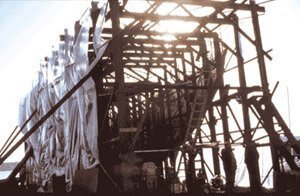
The 1974 crew chose ferrocement because it was cheap and enormously labour-intensive, and for a group with no money and a lot of willing hands that trade was exactly the right way round. A university has more willing hands than any organisation on earth. The trade is still the right way round.
But the real argument is what happens six thousand miles from a boatyard.
Ferrocement · the fleet standard
Repairable anywhere on earth
- The materials are sand, cement, steel mesh and water. There is no port, and few villages, where you cannot buy all four.
- Repair is chip out the damage, wire in new mesh, plaster, cure. Hand tools and supervisable labour.
- Damage is visible. Concrete cracks and spalls where it has been hurt, so you can see what is wrong.
- No marine borers, no osmotic blistering, no rot. Fireproof. Excellent against abrasion — ice, coral, concrete quays.
- Thermal mass, which matters when the campus spends its winters in the tropics.
Carbon fibre · rejected
A hull that has to come home
- A composite repair wants resin inside its shelf life, controlled temperature and humidity, vacuum bagging and release film, sometimes a heat blanket or an oven.
- It wants the correct ply schedule and a technician who has done it before. None of that exists up the Amazon.
- Composite damage can be invisible. Delamination inside the laminate leaves a hull that looks fine and is not.
- So the ship must return to a composites shop to be made safe again.
- A university that never comes home cannot have one.
The rig
A sail you can fix with a needle
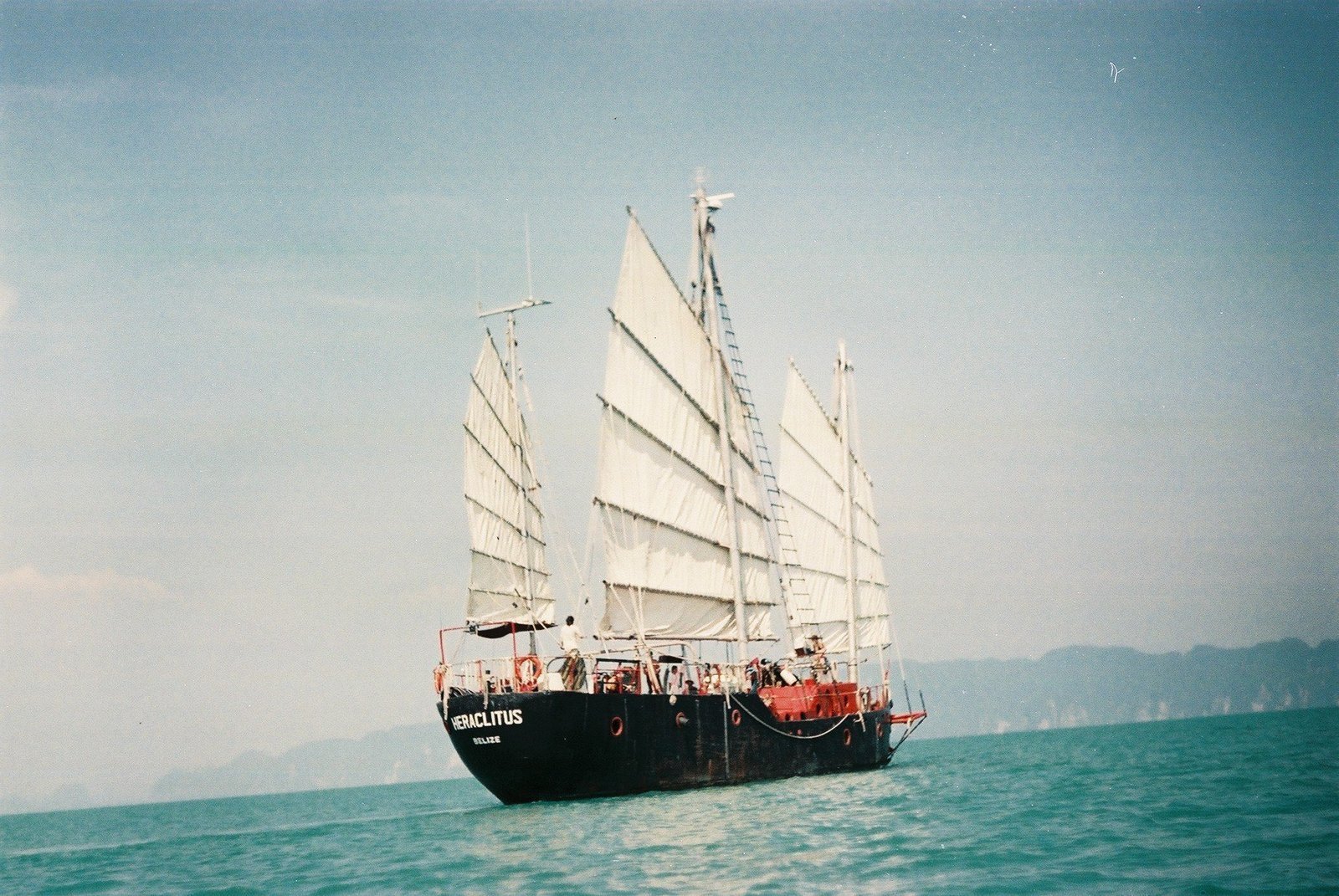
She already sails under a Chinese junk rig. This is her rig, not a redesign — flat panels between full-length battens.
You reef by dropping panels and the battens stack: fast, from the cockpit, single-handed, downwind, in a rising gale — which is precisely when every other rig asks somebody to go forward. No winches. Low loads. No headsail changes.
Almost no standing rigging, which deletes the classic offshore failure points: swaged terminals, turnbuckles, rod. Almost any cloth works, panels come off one at a time so a tear is not a lost sail, and the battens hold shape well enough that damaged cloth still drives the boat.
A needle, a sewing machine, and a length of bamboo.
What this standard costs us
Ferrocement is heavy, so the fleet is slow. Build quality is everything — a badly plastered hull corrodes its own mesh. Insurance and survey are harder, because few surveyors know the material, and resale value is poor. The junk rig gives up performance upwind; reaching and running is where it earns its keep.
Every one of those costs is acceptable for a school and unacceptable for a racing yacht. These are not fast ships. They are teachable ones.
Twelve watts
A human brain runs on about twelve watts. Assemble every supercomputer on earth and the pile still cannot fold a basket of laundry.
The industry's answer has been more. More power, more buildings, more water — roughly a third of what a large data centre consumes goes to cooling it, and that water competes with towns and farms.
Now put that on a ship.
The operating envelope
What a ship can give a computer
- No grid connection. Power is whatever the ship makes, and every watt spent computing is a watt not spent sailing.
- No municipal water main. Cooling is air, or it is nothing.
- No cloud within reach. A satellite link is thin, expensive and frequently absent.
- So the machine has to be small, dry, and genuinely useful with the network down.
Why it cannot be a rack in a shed
What will not work out there
- A season of hydrophone recordings will not fit up a satellite link. Neither will the video.
- So either the work waits for the dock — which is what happened for fifty years — or it happens where the data is made.
- Water-cooled hardware is not an option on a vessel that carries its own fresh water.
- Anything that needs a data centre is a system that only works alongside a data centre.
The ship keeps the notebook
Fifty years of expeditions produced a great many notebooks — coral surveys, water chemistry, recordings, close to a hundred and fifty interviews across six countries. Most of it got looked at properly months later, on land, by whoever had time.
The proposal is that every instrument feeds one system aboard that listens, sorts, cross-references and flags: a sound nobody has on file, a specimen matching nothing in the reference set, a chemistry reading that should not be there. Flagged while the ship is still in the bay, not next spring.
For a university that matters twice, because a student's field notebook and the ship's log stop being two separate objects. The catalogue becomes the thing the school publishes.
Three decisions, one logic
The hull can be repaired anywhere on earth with sand, cement and wire. The rig can be repaired with a needle and a length of bamboo. The computer has to run where there is no grid, no water and no cloud.
These are not three separate engineering choices. They are the same choice made three times: build for the place the thing actually has to work, and accept every cost that follows.
An eighty-four-foot concrete hull, under a sail you can stitch by hand, carrying as much computation as a ship can honestly power.
The fleet standard, completeThe onboard system is proposed, not installed. No hardware has been selected, no supplier engaged, and no performance figures are claimed on this page.
Students build hull three
The fleet does not get bought. It gets taught.
You cannot let students lay up a carbon hull. Steel wants certified welders. Timber wants shipwrights and years. Mesh and plaster can be taught in a week, inspected as the work goes on, and corrected while it is still wet — which makes ferrocement the only hull material a student can legitimately help build.
So every cohort in Marine Engineering builds part of the next hull. Hull three is a class project that floats, and each hull should cost less than the last as the yard learns.
That is not a gimmick. It is exactly how the first one got built: volunteers, salvaged scaffolding, no experience, and an eighty-four-foot hull plastered by hand.
Fund the materials. The students are the labour. The labour is the degree.
The sponsorship pitch, in one sentence
The fleet is named after an argument
Heraclitus said everything flows and nothing holds still. Parmenides said the opposite — that change is a trick of the senses and nothing truly moves at all. Two ships, two theses, one ocean between them.
Every hull is named for someone who argued about what the world is made of, and every hull teaches the thing its philosopher got closest to. Same concrete, same rig, ten arguments.
Hull names are not sponsorship inventory. Those belong to the philosophers. Anaxagoras, Zeno, Anaximenes and Aspasia are held in reserve.
Six schools, sixteen programmes
School of Ocean Science
- BS Oceanography
- BS Marine Biology & Fisheries
- BS Climate & Atmospheric Science
- BS Marine Geology
Thales · Anaximander · Xenophanes
School of Marine Engineering
- BS Marine Engineering & Naval Architecture
- BS Ferrocement Construction & Marine Materials
- BS Marine Chemistry
Democritus · Empedocles · the yard at Roses
School of Navigation & Mathematics
- BS Navigation & Hydrography
- BS Machine Perception & Sensor Fusion
- MS Ocean Data & Modelling
Hypatia · Parmenides
School of Coastal Cultures & Ocean Policy
- BA Maritime Anthropology & Ethnobotany
- BA Ocean Law & Policy
Heraclitus
School of Documentary & Ensemble Arts
- BFA Documentary Film at Sea
- BFA Expedition Theatre
Heraclitus · the Blue Planet Ensemble lineage
The Fleet Academy
- Seamanship, watchkeeping, logged sea service
- MS Expedition Science
Diogenes · every hull in the fleet
The part that is not a degree
On a working vessel, students stand watch, and watches get logged. Logged sea time is the currency of every maritime career there is. So the proposal is a stacked record: the degree, the sea service, and the certificates that sea service earns.
You would leave with a diploma and a licence. One of them gets you into a lab. The other one gets you onto a bridge.
The concept, in one sentenceCredential pathways depend entirely on flag state and a partner maritime academy. Nothing here is a confirmed pathway to a certificate of competency.
A ship has a flag. It does not have a homeland.
Every international school in the world sits inside one country — its laws, its holidays, its immigration queue. This one would not. The campus arrives in a port, and the port becomes the syllabus: fisheries in Galicia, coral in the Yucatán, ice in the Southern Ocean.
On her last expedition this crew recorded close to a hundred and fifty interviews with coastal communities across six Mediterranean countries. That was one voyage. Make it a curriculum.
The first university whose address is a set of coordinates, and the coordinates change.
What we are actually asking for
Not a fleet. One voyage.
Twelve students, one semester, on the hull that already exists — taught for credit through a marine science department that is already accredited, the way sea-going field semesters have been run for decades. That is the proof, and it is the only thing on this page that can be costed, scheduled and delivered inside two years.
The fleet is the argument. The pilot is the ask.
In 1974 they had no money, no shipyard and no experience. They pulled nails out of condemned houses and plastered an eighty-four-foot hull by hand. A café in Berkeley helped pay for it. That ship crossed six oceans.
Why we think the pilot is fundableWe are asking for more than coffee this time. Mostly we are asking for the first sponsor, because the second one is always easier.
Prefer paper? The whole pitch also fits on one printable page — or go straight to the PDF.
Prefer video? The whole pitch in sixty seconds — cut from the series and addressed to the first sponsor:
For the first sponsor
The whole pitch, in sixty seconds
“The fleet does not get bought. It gets taught.”
The concrete argument, the student-built hull, and the café that funded the first one — assembled from the series into one short film. Fund the materials; the students are the labour; the labour is the degree. We are asking for the first sponsor, because the second one is always easier.
Watch on YouTube →Vertical short · 61 seconds · outside the numbered series · contains AI-generated concept imagery, labelled on screen
Name a lab, not a building
| Inventory | What it is | Who it suits |
|---|---|---|
| One berth | A named scholarship: one student, one semester at sea. The cheapest thing on this list and the only one with a face attached. | Individuals, family foundations, alumni |
| Hull three | Materials for the next hull — cement, mesh, timber for the frame, rig and sailcloth. Students supply the labour as coursework. | Cement and steel producers, construction, marine trades |
| The wet lab | Bench, sample handling, cold storage, and the instruments that go with them. | Instrument makers, life science |
| The compute bay | The machine that keeps the catalogue — and the power and thermal budget that lets it run on what the ship makes. | Silicon, power systems, energy storage |
| The comms suite | Satellite bandwidth is the hard constraint on teaching at sea. Solve it and you are the reason this works. | Satellite and connectivity providers |
| The engine room | Propulsion, generation, and the marine engineering teaching platform itself. | Marine power, classification societies |
| The sail loft | Cloth, battens, and a machine — plus the workshop where students learn to build and repair their own panels. | Sailmakers, textile manufacturers |
| Drydock weeks | Yard time at Roses. Unglamorous, decisive, and denominated in weeks rather than dollars. | Yards, coatings, chandlery |
| The film unit | Cameras, audio, post. Every voyage documented; footage rights negotiable. | Camera and post manufacturers |
Other ways this gets paid for
In kind, before cash
Cement, mesh, sailcloth, battens, instruments, compute and power systems, bandwidth, software, survey time, underwriting. This is how the 1974 hull happened and it is still the highest-yield route, because it comes out of product and marketing budgets rather than philanthropy budgets.
Cadet berths for shipping lines
The officer shortage in commercial shipping is structural and documented. Sponsored berths solve an operator's problem, not ours. Commercially, this is the strongest argument on the page.
Public and institutional funding
Ocean science and mobility programmes in the EU, Spain and Catalonia; national ocean education and sea grant schemes; and endorsement as an action under the UN Decade of Ocean Science, which opens most other doors even though it carries no money itself.
Appropriate-technology funders
The ferrocement-and-junk-rig standard is field-repairable marine technology that transfers directly to coastal and island communities. That is a funding category of its own, and the fleet is a working demonstration of it.
Earned revenue, once she sails
Off-term charter to research groups and film crews. Short ocean-literacy voyages for boards and leadership teams, priced above student tuition and subsidising berths. Long time-series data and footage licensing.
Community
Berth-level support, where the unit is a person rather than a building fund: this much puts one student at sea for one week, with the voyage and the name published in the ship's log.
Where this actually stands
The honest ledger. We would rather you read this than find it out later.
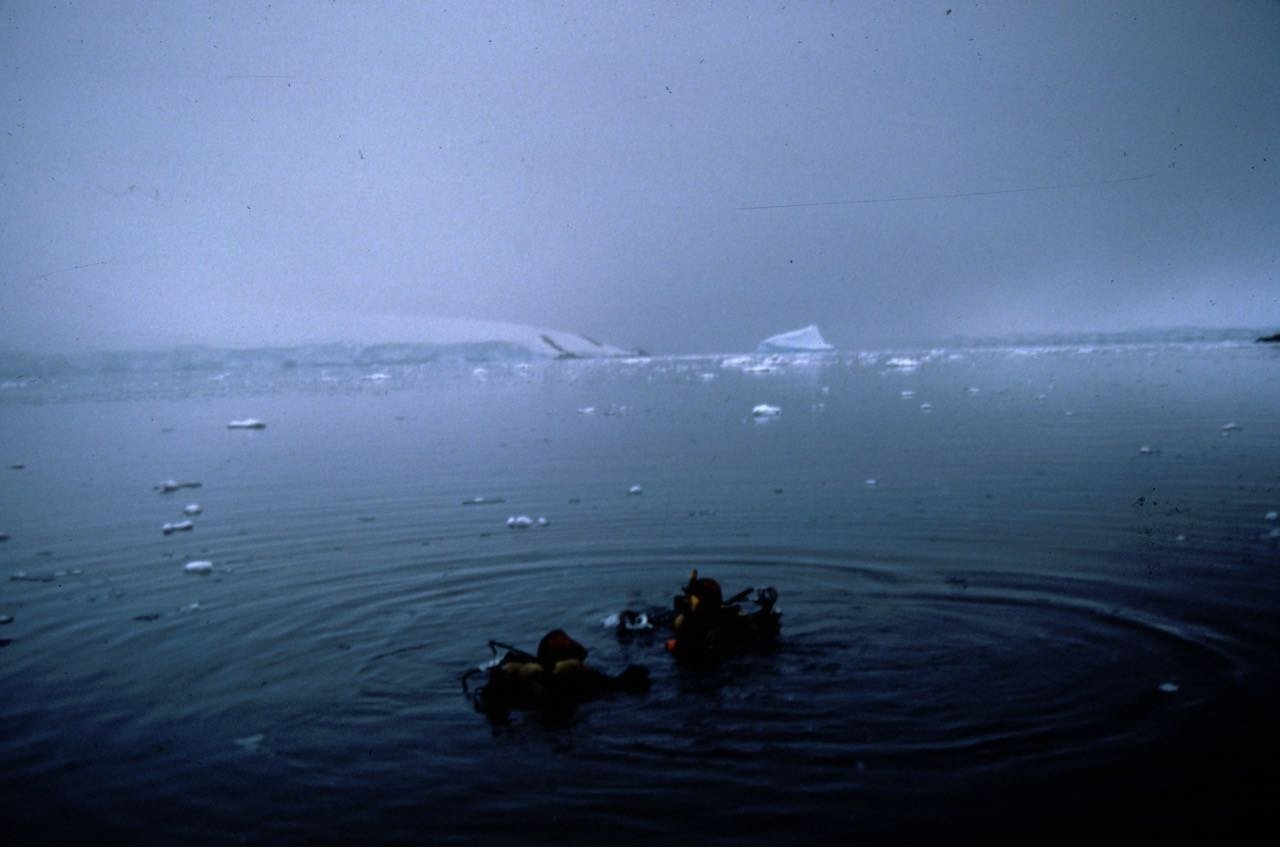
- TrueThe R/V Heraclitus is real. Eighty-four feet, ferrocement, junk-rigged, 270,000 nautical miles across six oceans between 1975 and 2010 — up the Amazon, beneath Antarctic ice, and around the Mediterranean.
- TrueShe is under rebuild at Roses, Catalonia, with a new hull of roughly sixty tons. Paint was completed in December 2025 after a year in which over fifty people came to work on her.
- TrueEverything on this page about ferrocement, composite repair and the junk rig is a fair description of the materials, trade-offs included.
- Not yetRVH University does not exist. No campus, no faculty, no admissions office, and no fleet beyond the one hull. The seal is new; the ship is fifty years old.
- Not yetNothing here is accredited or licensed, and nothing is enrolling. No application is open, and no deposit or tuition should be sent to anyone on the strength of this page.
- Not yetThe onboard computation is proposed, not installed. No hardware has been selected and no supplier engaged.
- Not yetThe schools, programmes, fleet and credential pathways are proposals. The nine hulls beyond the Heraclitus are concept renders.
The series — fourteen shorts
The whole concept in fourteen short chapters, built from photographs of the ship and clearly labelled concept renders. All fourteen episodes are out now.
Out now — episode one
No Buildings
“This university has no buildings.”
The opening chapter: no lecture halls, no quad, no parking structure — every class, every lab, every exam on a ship that has already logged 270,000 nautical miles across six oceans. Built from photographs of the real hull and clearly labelled concept renders.
Watch on YouTube →Vertical short · 37 seconds · contains AI-generated concept imagery, labelled on screen
Out now — episode two
You Cannot Study the Ocean From Indoors
“Seventy-one percent of this planet is water.”
The second chapter: in 1969 a group in the New Mexico desert did the arithmetic and built a ship — while almost every marine science degree on earth is still taught indoors. RVH University inverts it: the field is the campus, the semester is the voyage, the reading list is wet.
Watch on YouTube →Vertical short · 45 seconds · contains AI-generated concept imagery, labelled on screen
Out now — episode three
Sand, Cement, and Wire
“Made of concrete. On purpose.”
The third chapter: every ship in this fleet is made of concrete, on purpose. Ferrocement is steel mesh lashed over a frame with concrete worked in by hand — cheap, and enormously labour-intensive, which for a school is not a drawback, it is the curriculum. Six thousand miles from a boatyard, there is no port on earth where you cannot buy sand, cement, steel mesh and water.
Watch on YouTube →Vertical short · 51 seconds · contains AI-generated concept imagery, labelled on screen
Out now — episode four
A Carbon Hull Has to Come Home
“So why not build it out of carbon fibre?”
The fourth chapter: the counter-argument. A composite repair wants resin still inside its shelf life, controlled temperature and humidity, vacuum bagging — and a technician who has done it before. None of that exists up the Amazon, and composite damage can be invisible: a hull that looks fine and is not. A carbon hull has to come home. This university never comes home.
Watch on YouTube →Vertical short · 48 seconds · contains AI-generated concept imagery, labelled on screen
Out now — episode five
A Rig You Can Fix With a Needle
“The most repairable sail on earth.”
The fifth chapter: the rig. A Chinese junk rig — flat panels between full-length battens — reefs from the cockpit, single-handed, downwind in a rising gale, exactly when every other rig sends you forward. No winches, almost no standing rigging: the classic offshore failures simply do not exist. A torn panel comes off one at a time, and the battens hold enough shape that damaged cloth still drives the boat.
Watch on YouTube →Vertical short · 52 seconds · contains AI-generated concept imagery, labelled on screen
Out now — episode six
Twelve Watts
“A brain runs on about twelve watts.”
The sixth chapter: the computer. A ship at sea has no grid connection, no municipal water, no cloud within reach — whatever intelligence goes aboard has to run on power the ship makes, cool itself on air, and keep working when the network is down. The hull is repairable anywhere, the rig is repairable anywhere, the computer runs where there is nothing. Three decisions, one logic.
Watch on YouTube →Vertical short · 53 seconds · contains AI-generated concept imagery, labelled on screen
Out now — episode seven
The Ship Keeps the Notebook
“Flagged in the bay, not next spring.”
The seventh chapter: the notebook. Fifty years of expeditions produced coral surveys, water chemistry, recordings, interviews in six languages — and most of it got looked at properly months later, on land. A season of hydrophone audio will not fit up a satellite link, so the work happens where the data is made: every instrument feeding one system that listens, sorts, cross-references and flags.
Watch on YouTube →Vertical short · 51 seconds · contains AI-generated concept imagery, labelled on screen
Out now — episode eight
The Fleet Is Named After an Argument
“Heraclitus said everything flows.”
The eighth chapter: the fleet. Heraclitus said everything flows; Parmenides said nothing truly moves at all. Two ships, two theses, one ocean between them — and it is the Parmenides that would carry the computation. Ten hulls, every one named for someone who argued about what the world is made of: Thales, Anaximander, Xenophanes. Same concrete. Same rig. Ten arguments.
Watch on YouTube →Vertical short · 51 seconds · contains AI-generated concept imagery, labelled on screen
Out now — episode nine
What You Would Actually Study
“So what’s the degree?”
The ninth chapter: the schools. Six of them — Ocean Science; Marine Engineering, taught by plastering a hull you will later sail; Navigation and Mathematics; Coastal Cultures and Ocean Policy, because this crew once went up the Amazon and traded dance-drama for ethnobotanical knowledge; Documentary and Ensemble Arts; and the Fleet Academy, where the seamanship lives. Six schools. Sixteen programmes. One transcript with coordinates on it.
Watch on YouTube →Vertical short · 56 seconds · contains AI-generated concept imagery, labelled on screen
Out now — episode ten
Students Build Hull Three
“The fleet is not bought. It is taught.”
The tenth chapter: the building. You cannot let students lay up a carbon hull; steel wants certified welders; timber wants shipwrights and years. Mesh and plaster can be taught in a week, inspected as it goes, and corrected while it is still wet — so every cohort in Marine Engineering builds part of the next hull. Hull three is a class project that floats, exactly the way the first one got built in 1974. Fund the materials. The students are the labour. The labour is the degree.
Watch on YouTube →Vertical short · 49 seconds · contains AI-generated concept imagery, labelled on screen
Out now — episode eleven
You Graduate With a Licence
“A diploma and a licence.”
The eleventh chapter: the record. On a working research vessel, students stand watch, and watches get logged — and logged sea time is the currency of every maritime career there is. The proposal is a stacked record: the degree, the sea service, the certificates the sea service earns. One of them gets you into a lab. The other one gets you onto a bridge.
Watch on YouTube →Vertical short · 43 seconds · contains AI-generated concept imagery, labelled on screen
Out now — episode twelve
No Country
“A ship has a flag. It does not have a homeland.”
The twelfth chapter: the address. Every international school in the world sits in one country — its laws, its holidays, its immigration queue. This one would not. The campus arrives in a port and the port becomes the syllabus: fisheries in Galicia, coral in the Yucatán, ice in the Southern Ocean. On her last expedition this crew recorded close to a hundred and fifty interviews across six Mediterranean countries. That was one voyage. The first university whose address is a set of coordinates — and the coordinates change.
Watch on YouTube →Vertical short · 46 seconds · contains AI-generated concept imagery, labelled on screen
Out now — episode thirteen
A Café Paid For the First One
“The first hull was funded by coffee.”
The thirteenth chapter: the money. In 1974 they had no money, no shipyard, and no experience — they pulled nails from condemned houses, built scaffolding from the salvaged lumber, and plastered an eighty-four-foot hull by hand. A café in Berkeley helped pay for it. That ship crossed six oceans and dived beneath Antarctic ice. Hull names are not for sale; everything inside them is. We are asking for the first sponsor. The second one is always easier.
Watch on YouTube →Vertical short · 53 seconds · contains AI-generated concept imagery, labelled on screen
Out now — episode fourteen
This Does Not Exist Yet
“Everything you just watched is a concept.”
The honest close. No campus, because there is no campus. Nothing accredited, nothing enrolling, nobody should send tuition. The seal is new; the ship is fifty years old — and what exists is a new hull at Roses, hundreds of volunteers, and the entire ask. Heraclitus said you cannot step in the same river twice. Fine. Step in the ocean once.
Watch on YouTube →Vertical short · 55 seconds · contains AI-generated concept imagery, labelled on screen
- No Buildings“This university has no buildings.”Out now ↗
- You Cannot Study the Ocean From Indoors“Seventy-one percent of this planet is water.”Out now ↗
- Sand, Cement, and Wire“Made of concrete. On purpose.”Out now ↗
- A Carbon Hull Has to Come Home“None of that exists up the Amazon.”Out now ↗
- A Rig You Can Fix With a Needle“A torn panel is not a lost sail.”Out now ↗
- Twelve Watts“A brain runs on about twelve watts.”Out now ↗
- The Ship Keeps the Notebook“Flagged in the bay, not next spring.”Out now ↗
- The Fleet Is Named After an Argument“Heraclitus said everything flows.”Out now ↗
- What You Would Actually Study“So what’s the degree?”Out now ↗
- Students Build Hull Three“The fleet is not bought. It is taught.”Out now ↗
- You Graduate With a Licence“A diploma and a licence.”Out now ↗
- No Country“A ship has a flag. It does not have a homeland.”Out now ↗
- A Café Paid For the First One“The first hull was funded by coffee.”Out now ↗
- This Does Not Exist Yet“Step in the ocean once.”Out now ↗
The ship's own story runs as a separate eight-part series. Start at episode one →
Step in the ocean once
If you build instruments, move cargo, insure ships, make cement, make silicon, sew sails, run a foundation, teach, or just liked this — that is the entire ask. We have a one-page summary and we are building the pilot voyage budget. Tell us which one you want.
Or plainly: support@rvheraclitus.com · (800) 722-3870