R/V Heraclitus — the film

Our #1 mission

Re-launch this ship.

The R/V Heraclitus is one hull away from going back to sea. The rebuild at Roses needs hands, skills and word-of-mouth more than anything else — every person who learns this story is a potential volunteer. Share it.

One family, four houses  ·  1969 – today

The family tree of the concrete ship

No ship like the Heraclitus appears out of nowhere. She is the daughter of a desert ranch, the sister of a famous glass experiment in Arizona, and the flagship of an institute that has spent fifty years putting people inside the biosphere to study it. This page is the map — who built her, who grew from the same roots, and how it all connects back to the ship waiting in Roses.

The constellation

The mother ship  ·  rvheraclitus.org

The R/V Heraclitus project

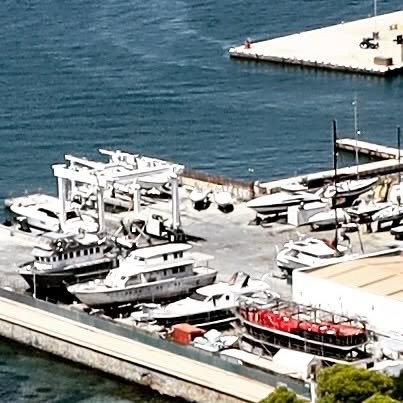
The ship's own home. The official project site carries the full record — 50 years of art, science & adventure, thirteen expeditions, some 60 countries, and the current rebuild in drydock at Roses, Catalonia.

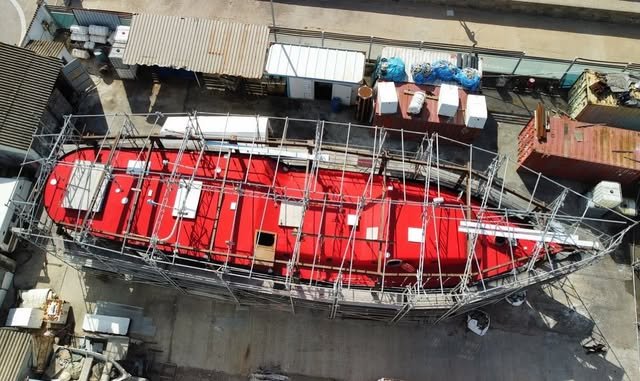
It is where you join the voyage as a volunteer and where donations to finish the rebuild land. The 84-foot ferrocement hull has been re-plastered, re-engineered and freshly painted by Jotun Marine Paints; what remains is interior systems, outfitting and rigging.

rvheraclitus.org →

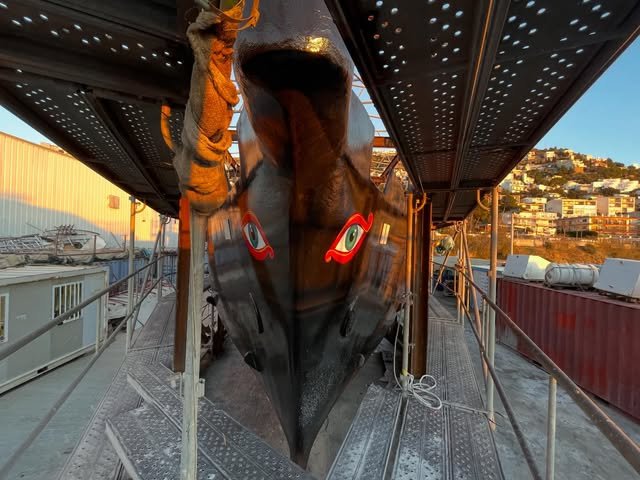
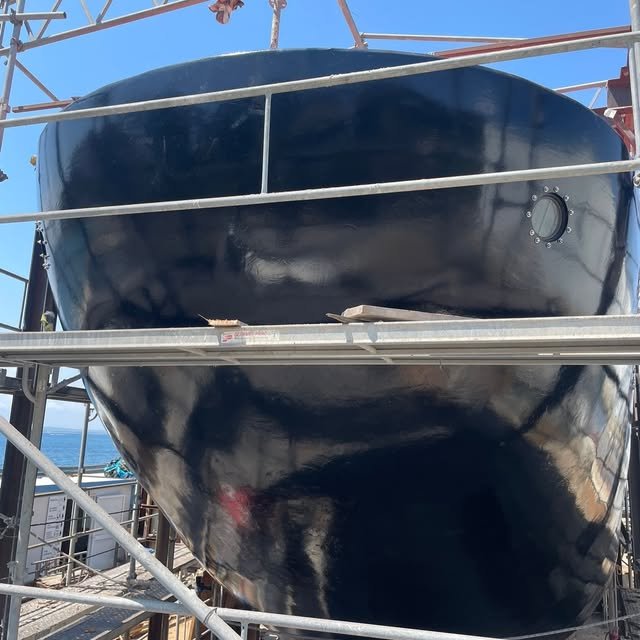
The bow of the R/V Heraclitus.
The ship herself — under rebuild since 2012

The root  ·  synergiaranch.com

Synergia Ranch

111 acres of high desert prairie south of Santa Fe, New Mexico, purchased in 1969 by a group set on undoing a century of overgrazing. They built with their own hands — adobe bricks, a 50-foot geodesic dome — and founded the Institute of Ecotechnics there.

The Theater of All Possibilities, the troupe that would build and crew the Heraclitus, was based at the Ranch from 1969 to 1987. Today Synergia is a retreat center and runs an agroecology program under Dr. Starrlight Augustine.

synergiaranch.com →

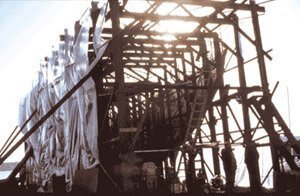
Volunteers' timber scaffolding around the hull armature during the 1974 construction.
Volunteer labour, learned at the Ranch — Oakland, 1974

The institute  ·  ecotechnics.edu

Institute of Ecotechnics

Founded at Synergia Ranch in the early 1970s and working formally since 1973, the Institute exists to harmonise technology with the biosphere — by building working demonstrations in every major biome rather than writing papers.

Its co-founder John Allen argued that understanding the planet meant going to sea, so the Institute built the Heraclitus. Its projects span agroecology in New Mexico, sustainable forestry at Las Casas de la Selva in Puerto Rico, Wastewater Gardens, London's October Gallery — and it birthed Biosphere 2. The Heraclitus remains its marine exploration project.

ecotechnics.edu →

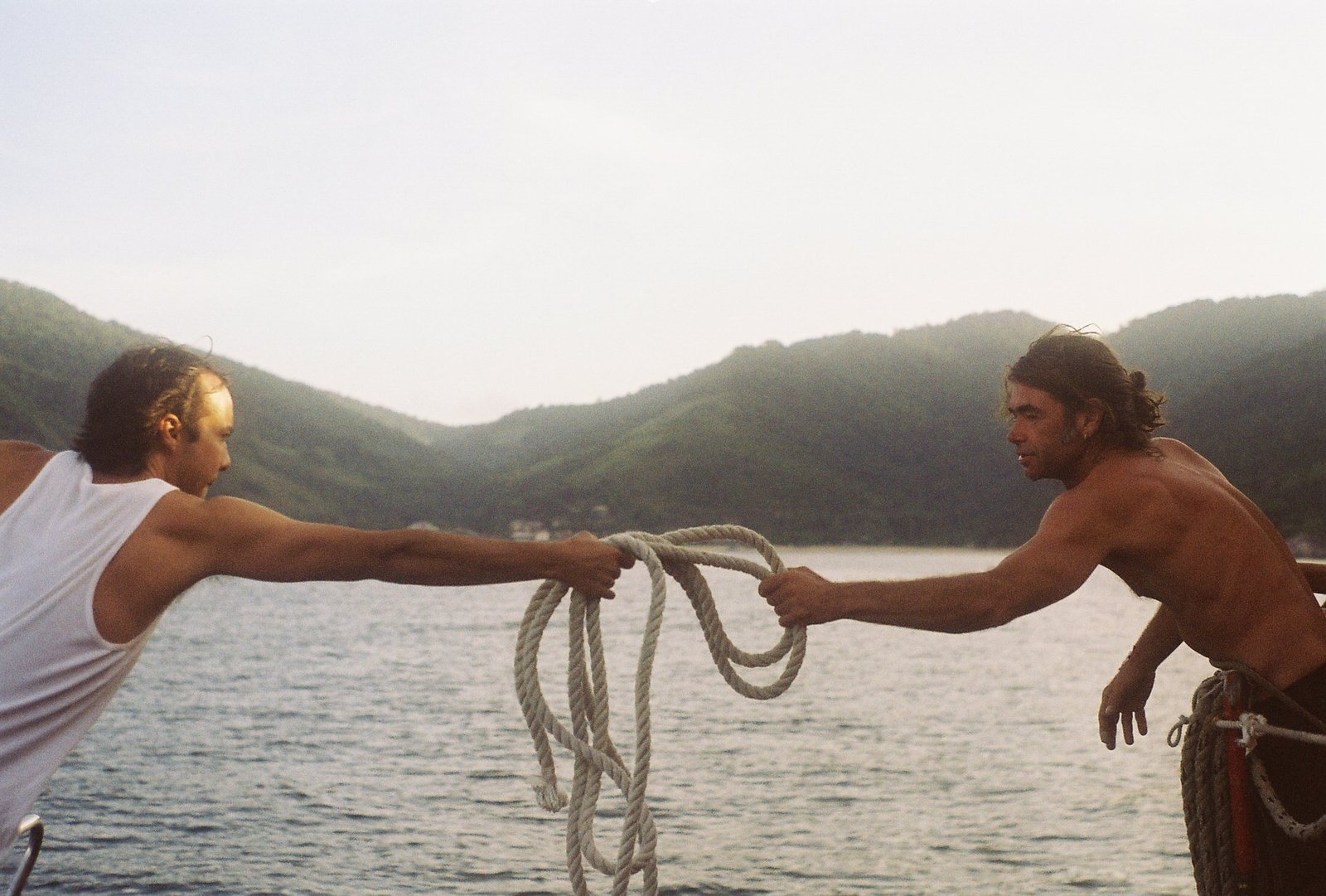
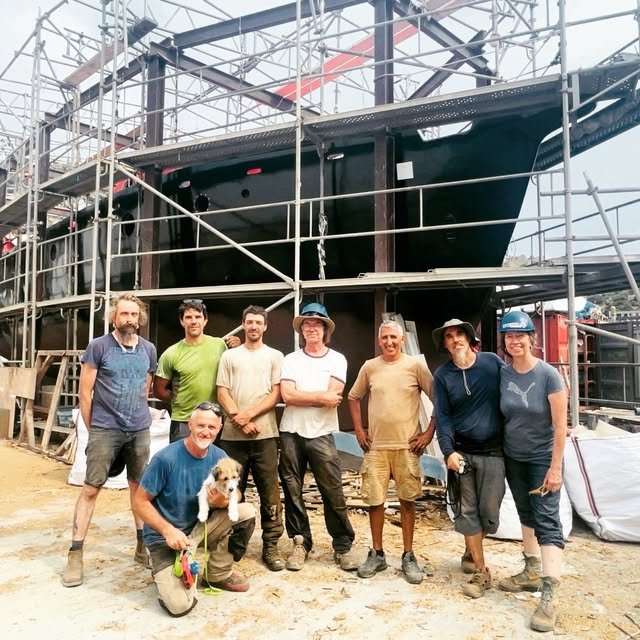
Crew of the Heraclitus working together aboard.
Ecotechnics' floating demonstration — ship and crew

The famous sibling  ·  biosphere2.org

Biosphere 2

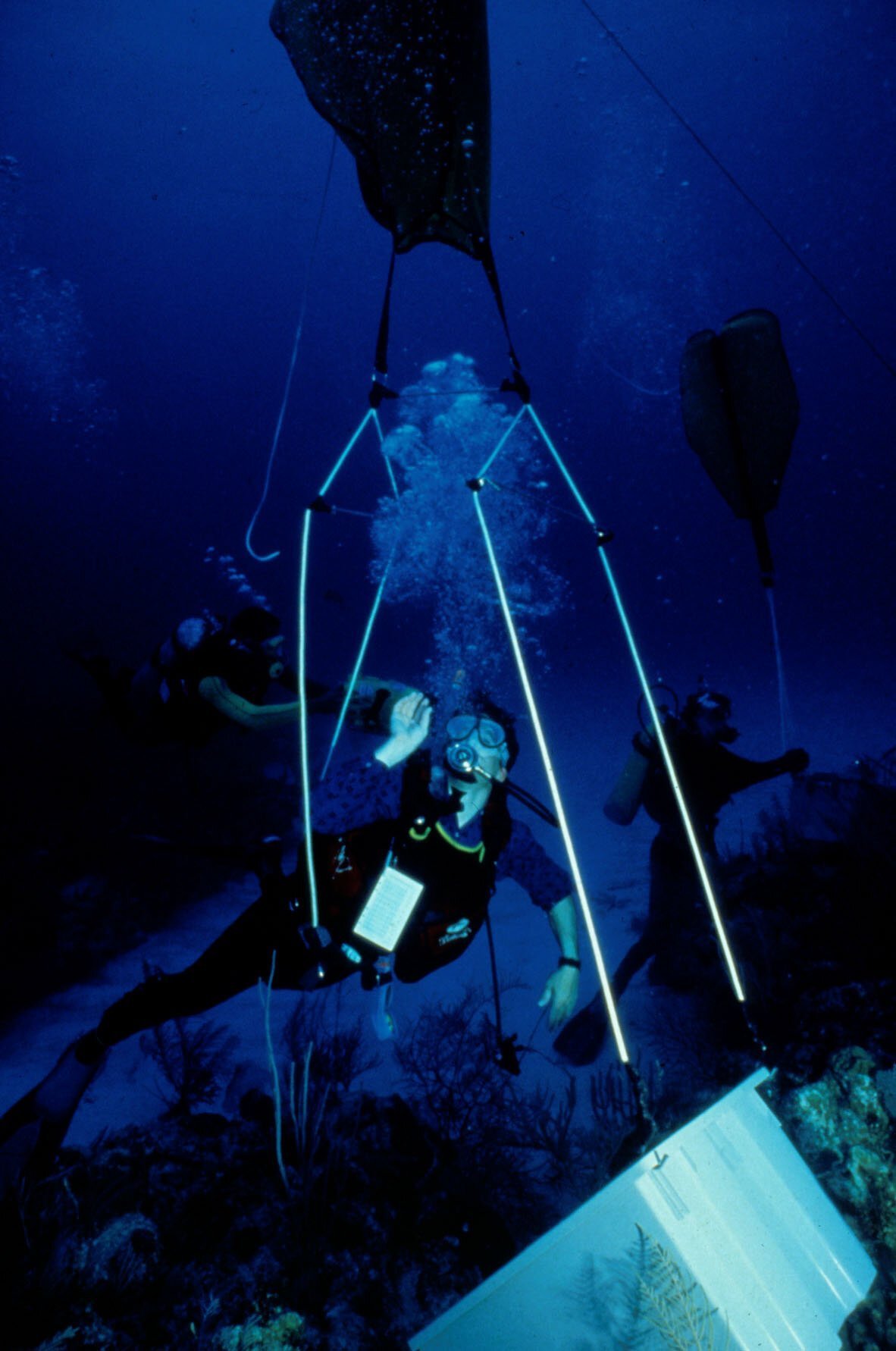
The Institute's most high-profile project: a 3.14-acre sealed ecological laboratory in Oracle, Arizona, built to test whether biospheres can work. The Heraclitus collected its ocean — hundreds of coral specimens floated up on lift bags off Akumal, trucked three days into the desert with lights and pumps to keep temperature and salinity steady.

Today Biosphere 2 is run by the University of Arizona as a world-class Earth-science research and education facility — rainforest, ocean, mangrove, desert and the Landscape Evolution Observatory under glass. The sealed-ocean coral work became one of the earliest hard datasets on what rising CO₂ does to coral.

biosphere2.org →

The artificial ocean and coral reef inside Biosphere 2.
The ocean the ship delivered — Oracle, Arizona

How it connects

1969

Synergia Ranch

Land bought; a community starts restoring it and builds everything it needs by hand.

1973

Institute of Ecotechnics

Formalised at the Ranch — demonstration projects in every biome: deserts, rainforests, cities, and the sea.

1975

R/V Heraclitus

Built by Institute volunteers + Theater of All Possibilities in Oakland. 270,000 nm, six oceans, 13 expeditions. Rebuilding at Roses since 2012.

1985–91

Biosphere 2

Institute-built sealed laboratory in Arizona. Its ocean was collected by the ship. Run by the University of Arizona since 2007.

1983–

Las Casas de la Selva & more

Sustainable forestry in Puerto Rico, Wastewater Gardens, October Gallery in London — sibling projects around the world.

Every branch of this family was built the same way: no money, many hands, and the conviction that you learn the biosphere by living inside it. The ship is the branch that floats — and she floats again only with the same recipe: hands.The mission, restated

The whole line, 1969 → today

  1. 1969 · Synergia Ranch

    The desert beginning

    111 acres of overgrazed high desert south of Santa Fe are bought by a group who spend the following decades turning it into an oasis. The Institute of Ecotechnics grows out of this community.

  2. 1973 · Institute of Ecotechnics

    The institute formalises

    Ecotechnics establishes itself with demonstration projects across biomes. John Allen: to understand the planet's diversity, the Institute needs an ocean-going ship.

  3. 1974–75 · Oakland

    The ship is built

    Keel laid August 1974 on salvage nails and lumber; volunteers plaster the ferrocement hull by hand; funded partly by the Junkman's Palace café in Berkeley. Launched 24 February 1975. Junk-rigged because Allen had lived on a Hong Kong junk and prized stability over speed.

  4. 1975–79

    01 · Shakedown voyages

    Maiden voyage from San Francisco Bay south along the coast, through the Panama Canal, to the San Blas islands. Celestial navigation, sea time, and a crew learning the ship.

  5. 1979–80

    02–03 · Indian Ocean & the East

    Indian Ocean circumnavigation from Darwin with a large volunteer crew, then Australia to Bali, Java, Singapore and Penang — performing in port after port.

  6. 1980–82

    04 · Amazon expedition

    Up the Amazon after ethnobotanist Richard Evans Schultes' suggestion, trading dance-drama performances with river villages for ethnobotanical knowledge.

  7. 1983–86

    05 · Around the Tropic World

    Around the world by the tropics — the Pacific, Asia, Africa, the Americas — studying coral, mangroves and the cultures of the tropical belt.

  8. 1986–87

    06 · Coral, mangroves, dolphin release

    Coral and mangrove studies from Puerto Rico, where the crew also helped the Institute establish Las Casas de la Selva, its thousand-acre rainforest forestry project — and released rehabilitated dolphins.

  9. 1987–89

    07 · Antarctica

    The ship insulated for polar work and sailed south along South America's Pacific coast. Crew dived beneath Antarctic sea ice.

  10. 1990–91

    08 · Collections for Biosphere 2

    Florida wetland specimens gathered for Biosphere 2, then hundreds of coral colonies floated off Akumal on lift bags and trucked alive into the Arizona desert. The sibling project's ocean, delivered by the ship.

  11. 1991–95

    09 · Central America coral studies

    The Bahamas, Lesser Antilles, Venezuela (drydock), Mexico and Miami — reef studies across the Caribbean, anchored long in Belize.

  12. 1995–2001

    10 · Indian Ocean & SE Asia reef mapping

    Years of coral reef mapping as reefs worldwide began their steep decline — the ship's data became part of the accumulating evidence.

  13. 2001–04

    11 · Second coral reef stage — home to Oakland

    Pacific crossing from Guam to Seattle and San Francisco, docking in Oakland — the very place she was built, thirty years on.

  14. 2006–10

    12 · Coral Sea to Mediterranean

    From Cairns across the Southern Indian Ocean; drydock near Cape Town beside the Uruguayan Navy; across the Atlantic to Brazil and the Matutu Foundation — another Institute sibling — then north to the Mediterranean.

  15. 2011–

    13 · Lives and Legends of the Mediterranean

    The final expedition to date: filming nearly 150 interviews with sea people and coastal dwellers in six countries — documenting communities facing ecological and cultural upheaval as the sea changes.

  16. 2012 · Roses, Catalonia

    The rebuild begins

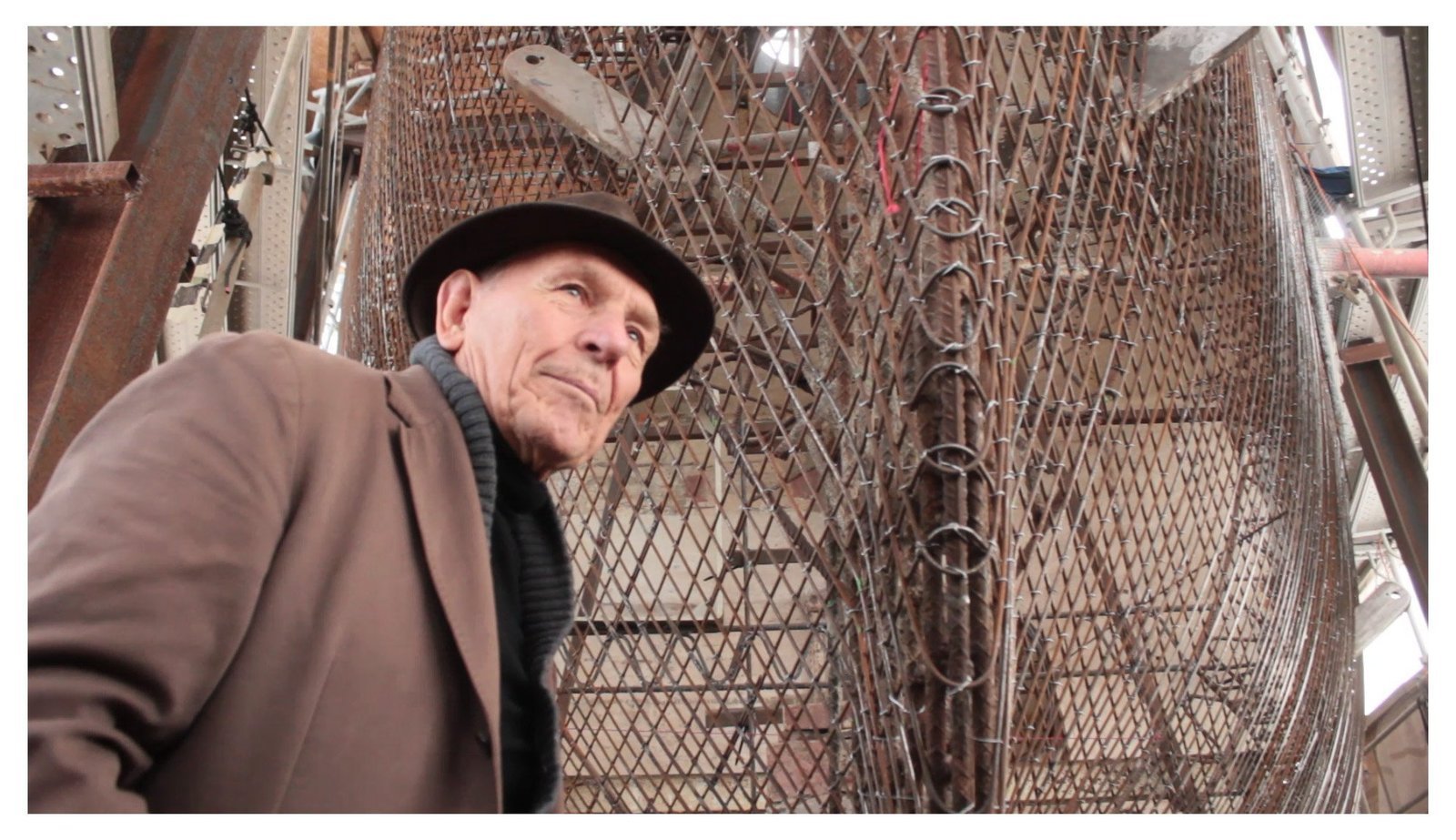
    Ecotechnics Maritime and the Institute of Ecotechnics (UK) commit to a complete rebuild: a new ferrocement hull of roughly sixty tons with upgraded engineering throughout. Hundreds of volunteers pass through the shipyard over the following years.

  17. 2024

    Jotun paints the ship

    Jotun Marine Paints donates a full coat of sealant and colour — part of over $40,000 in donations and supplies including all the mariner's paint needed to seal the hull.

  18. 2025

    Uncovered and painted

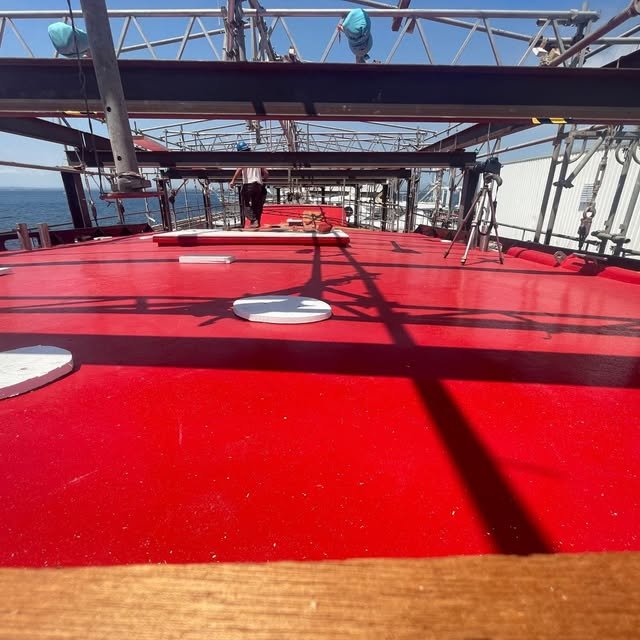
    The ship emerges from her protective cocoon with a freshly painted hull and deck; over fifty people worked on her during the year; the paint coat completed 19 December 2025.

  19. Now

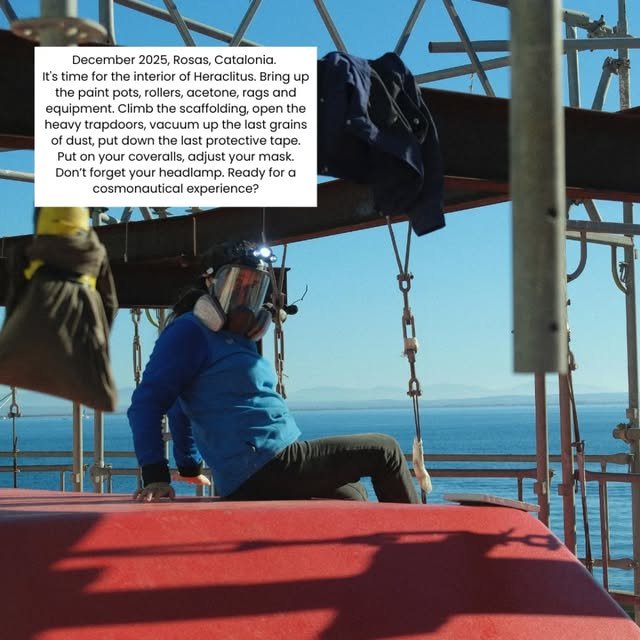
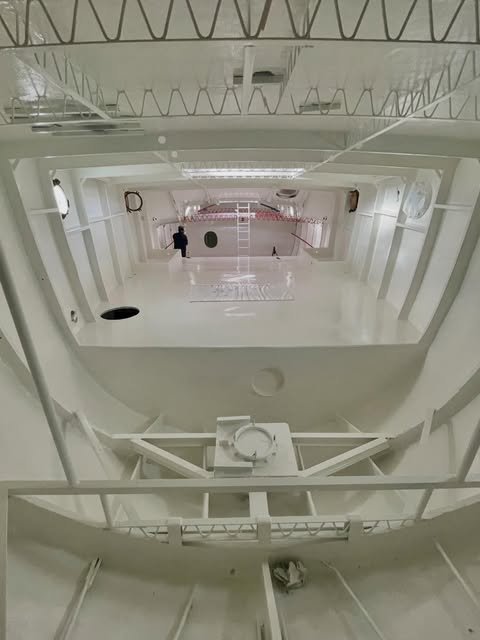
    What is left is the interior

    Systems, outfitting, rigging — then she goes back. New instruments, a bio research lab, and a Marziani Cinema™ AI system working alongside the crew. This is where volunteers decide the launch date.
Our #1 mission: re-launch this ship.

She has been not-done for fourteen years. A finished hull, a painted exterior, and an interior waiting for hands. The single fastest way to get her back on the water is people — volunteers with skills and willing hands at Roses, and voices everywhere else.

If you weld, wire, rig, plank, paint, cook, film, or simply tell stories well — the voyage is taking crew. If you can't go, tell someone who can. Awareness is the cargo this ship needs most.